

Reading Nutrition Labels: A Guide for Parents
As a parent, ensuring your children eat nutritious foods is one of the most important responsibilities you have. With packaged foods filling supermarket shelves, Reading Nutrition Labels becomes an essential skill. Reading Nutrition Labels empowers you to make informed choices that support your child’s growth, energy levels, immune function, and long-term health. Many parents overlook this step, relying on front-of-pack claims like “low-fat” or “natural,” but the real story lies in the detailed nutrition facts panel on the back or side.
Also read Medication Adherence: Making It Fun for Kids
In India, the Food Safety and Standards Authority of India (FSSAI) mandates clear nutrition labeling on packaged foods. These labels help you identify hidden sugars, excessive sodium, unhealthy fats, and beneficial nutrients. Mastering Reading Nutrition Labels can prevent issues like childhood obesity, dental problems from excess sugars, high blood pressure from too much salt, and nutrient deficiencies that affect development. This comprehensive guide walks you through every aspect of Reading Nutrition Labels, tailored for parents raising healthy kids. Reading Nutrition Labels: A Guide for Parents
reading nutrition labels for kids, reading a nutrition label, reading nutrition labels, nutrition labels for kids, how to read a nutrition label for dummies, nutrition labels for dummies, how to read nutrition labels for weight loss, reading food labels for kids, how to read a nutrition label, how to read a nutrition facts label, how to read nutrition labels, food labels nutrition information, nutrition facts labels how to read, nutrition labels, nutrition labels on food, nutrition labels 101
Why Reading Nutrition Labels Matters for Parents
Children’s bodies are growing rapidly, requiring balanced nutrients for bone development, brain function, immunity, and physical activity. Poor choices can lead to short-term issues like fatigue or hyperactivity and long-term risks such as type 2 diabetes or heart disease. Reading Nutrition Labels allows you to control what goes into your child’s meals and snacks. Reading Nutrition Labels: A Guide for Parents
For example, many children’s favorite packaged foods—cereals, juices, biscuits, and ready-to-eat snacks—contain high amounts of added sugars and sodium. By Reading Nutrition Labels, you can spot these and opt for better alternatives. Studies show that parents who regularly use nutrition labels make healthier purchases, leading to improved family diets. In India, where processed foods are increasingly common, Reading Nutrition Labels is crucial to navigate FSSAI regulations and avoid misleading claims.


Understanding Nutrition Labels in India (FSSAI Guidelines)
FSSAI requires nutrition information on most packaged foods. Labels must display key details clearly. Start with the FSSAI logo and license number to confirm authenticity. Look for veg/non-veg symbols (green/brown dots) and fortified food logos if applicable. Reading Nutrition Labels: A Guide for Parents
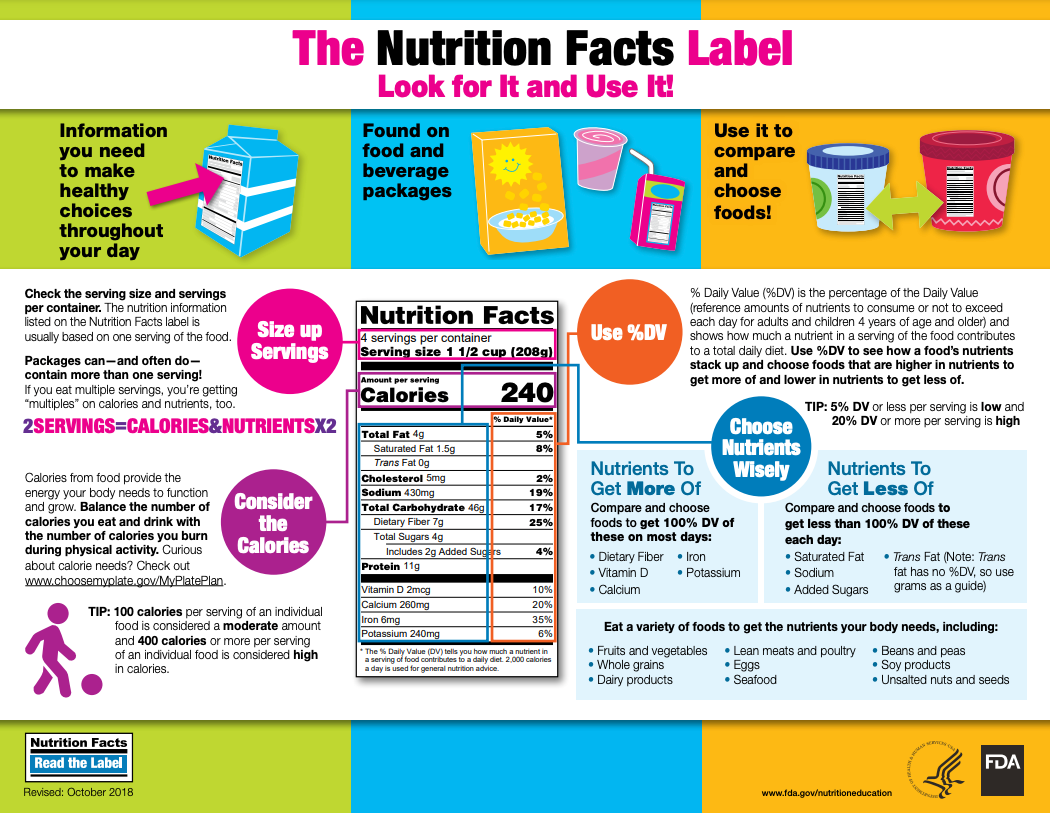
The nutrition facts panel provides data per 100g/100ml or per serving. Always check the serving size first—it’s often smaller than what a child consumes. For instance, a snack pack might list one serving as 30g, but your child could eat the whole 100g pack.


Key Components of a Nutrition Label
1. Serving Size and Servings Per Pack. This is the foundation of Reading Nutrition Labels. It tells you the reference amount for all other values. If the label says “Serving Size: 50g” and “Servings Per Pack: 5,” the whole pack is 250g. Adjust calculations if your child eats more. Reading Nutrition Labels: A Guide for Parents
2. Energy (Calories) Listed in kcal, this shows energy from one serving. Kids need balanced calories for activity without excess,s leading to weight gain. Compare products—lower calories per serving might suit snacks.
3. Protein Essential for muscle growth, repair, and immunity. Aim for foods with good protein levels, especially in vegetarian diets common in India.
4. Carbohydrates, Total Sugars, Added Suga.rs Carbs provide energy, but focus on added sugars. FSSAI now requires declaring added sugars. Limit these to avoid spikes in blood sugar and obesity risk.
5. Total Fat, Saturated Fat, Trans: Fat Choose low saturated and trans fats to protect heart health. Trans fats are especially harmful and often hidden in processed snacks.
6. Sodium High sodium contributes to hypertension. Indian snacks can be very high—look for lower options.
7. Dietary Fibre Promotes digestion and fullness. Higher fibre helps control appetite. Reading Nutrition Labels: A Guide for Parents
8. Vitamins and Minerals Look for calcium, iron, vitamin D, etc. Fortified foods can help meet needs.
9. % Daily Value (DV) or Guideline Daily Amount (GDA) Shows how much a nutrient contributes to daily needs (based on 2000 kcal). 5% or less is low; 20% or more is high. Use this to compare products quickly.
10. Ingredients List Listed in descending order of quantity. The first few ingredients dominate. Avoid products where sugar, salt, or refined oils appear early.
11. Allergens Bolded declarations for common allergens like milk, nuts, soy, wheat. Crucial for children with allergies.
12. Other Declarations Expiry dates, storage instructions, and claims (e.g., “low sugar” must meet standards).

How to Use Nutrition Labels When Shopping
When shopping, scan labels: Start with serving size, check calories and added sugars, then fats and sodium. Compare similar products—choose the one with lower sugars/fats and higher fibre/protein. For kids’ snacks, prioritize whole grains, low added sugars, and no trans fats. Reading Nutrition Labels: A Guide for Parents
Teach older children to join in Reading Nutrition Labels. Turn it into a game: “Which cereal has more fibre?” This builds lifelong habits.
Common Mistakes Parents Make When Reading Nutrition Labels
- Ignoring serving size and overeating.
- Falling for front claims without checking the back.
- Assuming “no added sugar” means sugar-free (natural sugars count).
- Overlooking trans fats or hidden sodium.
- Not adjusting for the child’s age-specific needs (younger kids need fewer calories).
Avoid these by always cross-checking and prioritizing whole foods.
Success Stories: Real Parents Making a Difference
Many parents have transformed their children’s health through Reading Nutrition Labels.
Story 1: Priya from Delhi noticed her 8-year-old son was gaining weight and had low energy. After starting Reading Nutrition Labels on biscuits and juices, she switched to low-sugar, high-fibre options. Within months, his energy improved, and he lost excess weight without feeling deprived. Reading Nutrition Labels: A Guide for Parents
Story 2: Rajesh, a father in Mumbai, discovered high sodium in his daughter’s favorite snacks. By Reading Nutrition Labels diligently, he chose lower-sodium alternatives and homemade versions. Her blood pressure stabilized, and the family adopted healthier eating overall.
Story 3: Anjali in Bangalore used Reading Nutrition Labels to manage her son’s nut allergy. Spotting hidden traces in labels prevented reactions and gave her confidence in her choices. Reading Nutrition Labels: A Guide for Parents
Story 4: A family in Uttar Pradesh reduced added sugars by checking labels on cereals and drinks. Their children showed better concentration and fewer mood swings, highlighting how Reading Nutrition Labels supports overall well-being.
These stories show that consistent reading of nutrition labels leads to tangible improvements.
Disclaimer
This article is for informational purposes only and is not a substitute for professional medical or nutritional advice. Consult a pediatrician, dietitian, or healthcare provider for personalized guidance on your child’s diet, especially if they have allergies, medical conditions, or special needs. Nutrition needs vary by age, activity, and health status. Reading Nutrition Labels: A Guide for Parents
FAQs on Reading Nutrition Labels
1. What is the difference between total sugars and added sugars? Total sugars include natural (from milk/fruit) and added. Added sugars are extra and should be limited.
2. How do I know if a product is truly healthy? Look beyond claims—check for low added sugars, saturated fats, sodium, and high fibre/protein.
3. Is per 100g or per serving better? Use per serving for actual consumption, but per 100g for fair comparisons.
4. What does % Daily Value mean for kids? It’s based on 2000 kcal for adults, but adjust for children (younger people need less).
5. Should I avoid all fats? No—healthy fats from nuts/seeds are good. Limit saturated/trans.
6. How can I teach my child to read labels? Start simple: Focus on sugars or fibre. Make it fun with comparisons.
7. Are organic foods always healthier? Not necessarily—check nutrition facts for sugars/fats.
8. What about fortified foods? They add vitamins/minerals, useful in deficiencies, but check the overall profile.
9. How often should I check labels? Every time for new products, habits form with repetition.
10. Can labels help with weight management? Yes—tracking calories, sugars, and portions supports a healthy weight.
References
- Eat Right India (FSSAI): https://eatrightindia.gov.in/how-to-read-label.jsp
- KidsHealth: https://kidshealth.org/en/parents/food-labels.html
- FDA Nutrition Facts Resources (for general principles)
- National Institute of Nutrition, India guidelines
- Various health portals on child nutrition and label reading.